


For the H’mông people, dó paper (a traditional handmade paper) is used on special occasions such as Lunar New Year, ancestor worship, ceremonial rites, and funerals. According to beliefs, dó paper serves as a means to connect the living with the deceased, reminding descendants of their roots.
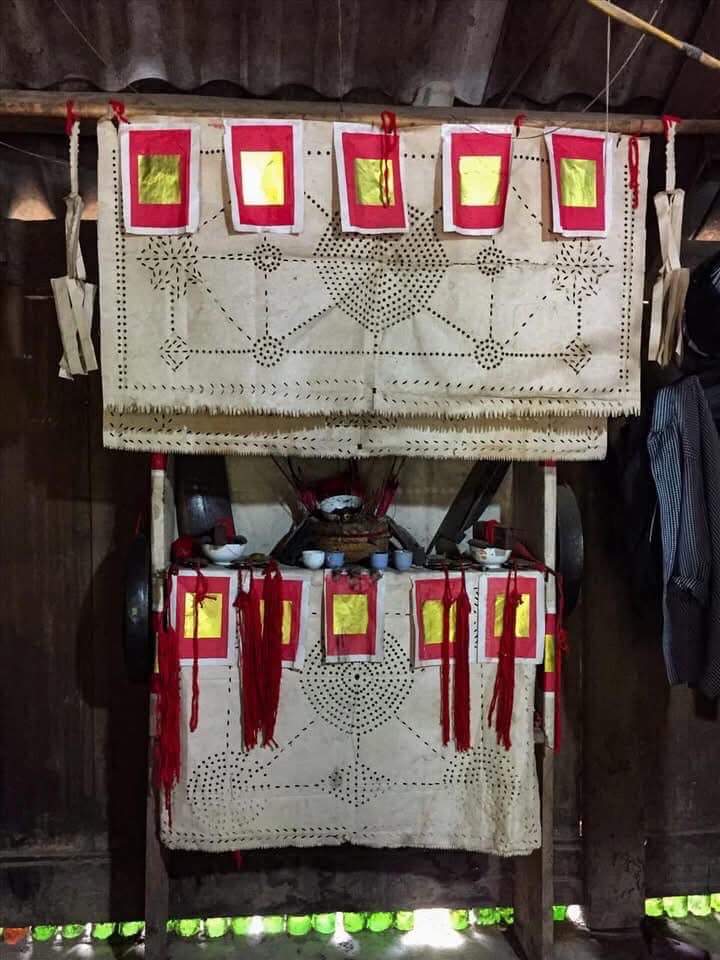
The H’mông people use rice paper to decorate their altar
The bamboo and rattan forests at the end of the village are the sources of raw materials for the H’mông people in Nậm Than to make dó paper. The villagers go to the forest, carefully select mature bamboo stalks, cut them into neat sections, and bring them home. It takes many meticulous steps to process the raw materials into the special paper. If the bamboo is too old or too young, it cannot be used. They choose bamboo of medium age, cut the segments evenly at the joints.
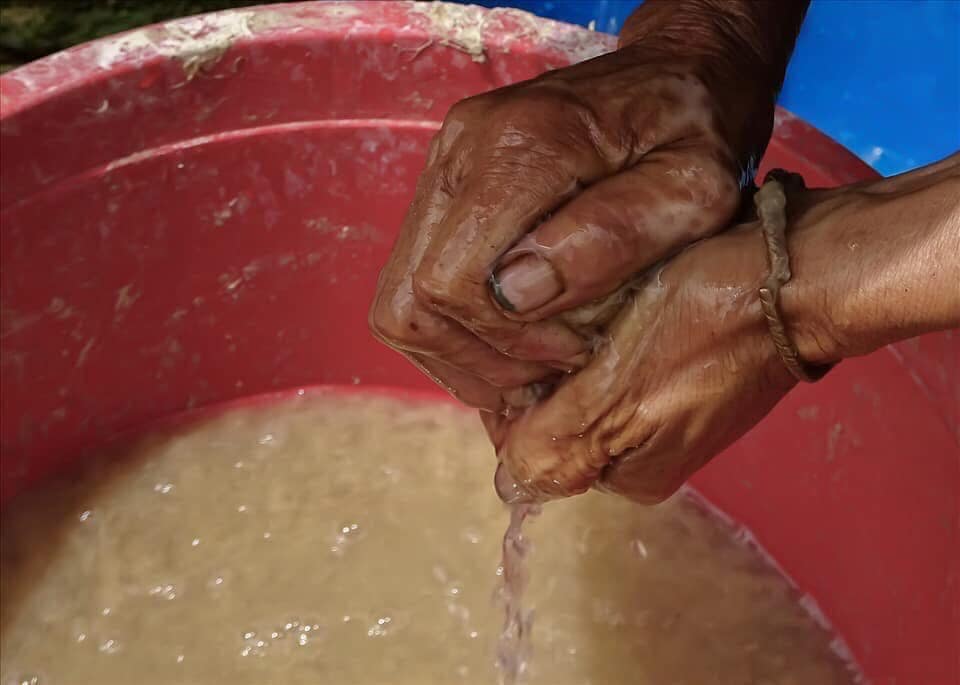
The Step of Removing and Filtering Bamboo Pulp
After boiling the bamboo and rattan thoroughly, they soak and ferment it for 7 days. Then, they beat it until soft, filter out the pulp, and mix it with a special glue extracted from forest trees. The paper molds come in various sizes, usually rectangular, with a surface stretched with thin cloth and secured with four sturdy wooden sticks. Skillfully, women spread the pulp gradually onto the mold, smoothing it evenly. The sheets are then dried under the sun for many hours, forming the finished dó paper.
Dó paper mainly serves the daily needs of the community in the village. The elders in Nậm Than hope that through gatherings and making dó paper, the younger generation will better understand and cherish their cultural identity.
With the development of community-based tourism, the craft of making dó paper in Nậm Than is also recognized as an interesting experience for visitors coming to the Mông village. This practice is also a way for the H’mông people to preserve, maintain, and develop their traditional craft within modern life.
0 Comment