


As one of the five ethnic minorities in Sa Pa, the Giáy people in Sa Pa have many traditional spiritual rituals throughout the year, such as the rice planting festival, village deity offerings, forest rituals, and New Year blessings. Among these, the Tú Tỉ offering ceremony is a significant spiritual practice in the lives of the Giáy community. Let’s explore this special ceremony with Sa Pa’s Thổ địa – Original Sa Pa.
The Tú Tỉ offering is held annually on the 2nd day of the lunar calendar month of February. It is one of the most important rituals for the community and village, because besides praying to the land deity for good luck, the villagers also enjoy singing, dancing, and preparing traditional dishes of their ethnic culture.
In the Giáy language, Tú Tỉ means the land deity, the god who governs the land. The belief is that “the land has Thổ Công (land spirits), the river has Hà Bá (river spirits),” meaning that every community living on a land must worship its land deity.
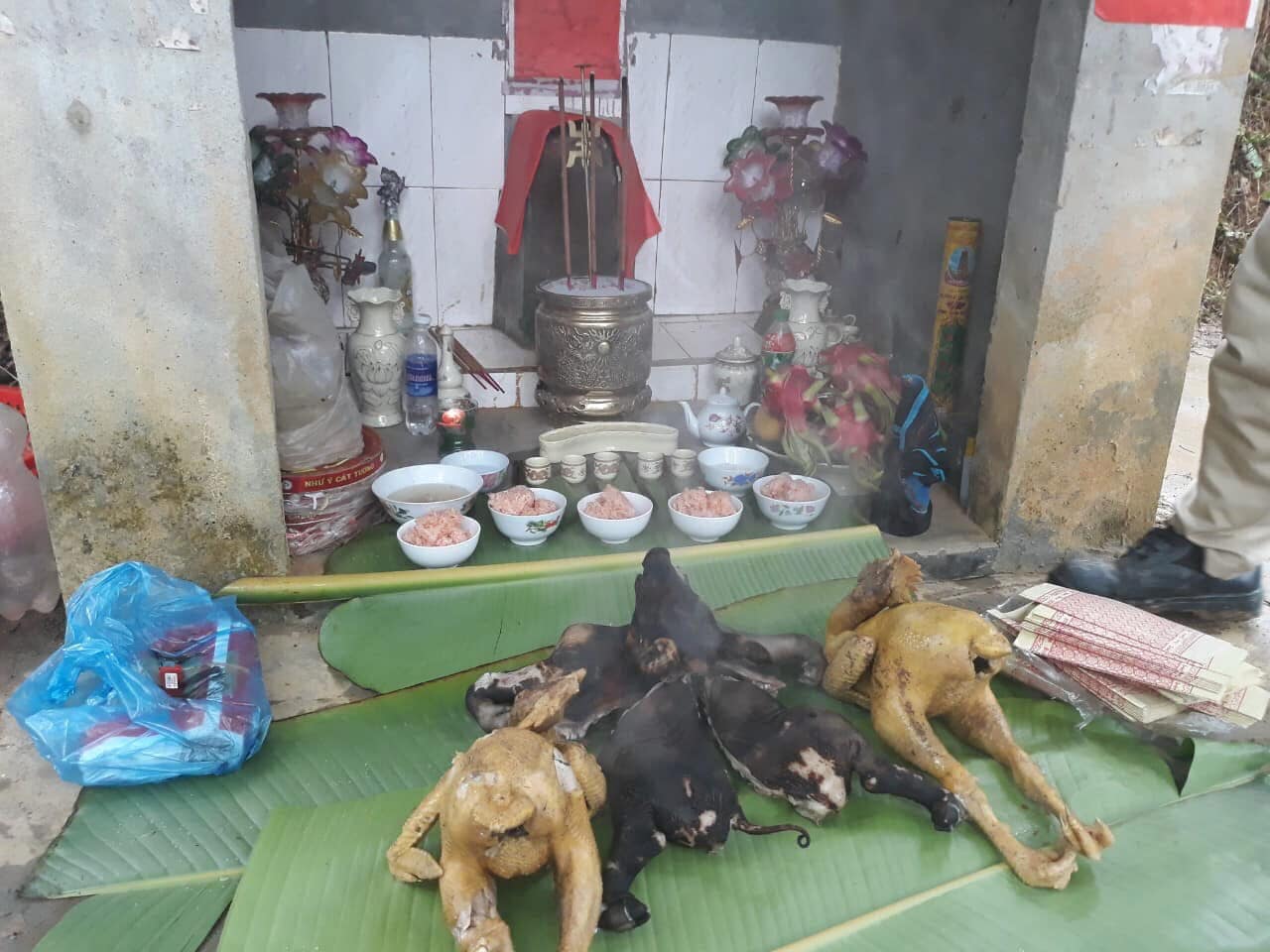
Offerings for the Tú Tỉ Ceremony
The ritual is performed at a sacred mound, a high hill, or a sacred tree in the village, chosen by a shaman. Every year, on the 2nd lunar day of February, the community conducts the offering. The offerings to Tú Tỉ include:
- 1 pig
- 2 healthy roosters
- 5 bowls of sticky rice (xôi)
- Candies, sweets, fruits, gold and silver coins
Before the main ceremony, villagers gather in meetings, and two households are appointed to lead the ritual and prepare the offerings. Each family sends a male member to participate at the altar. The ceremony usually takes place from 8 to 9 a.m.
According to the Giáy customs in Bản Sái village, Liên Minh commune, the Tú Tỉ offering is a prayer for the land deity’s protection, wishing the villagers peace, good health, fruitful harvests, and prosperity abundant rice, corn, and thriving livestock like buffaloes, cows, pigs, and chickens.
During these days, the villagers also clean and tidy the area. Only men participate in the ritual; pregnant women, women who are unclean, or nursing mothers are not allowed to attend.
Prayers and rituals focus on asking the land deity to bless the community with safety, happiness, health, and prosperity such as having full granaries of rice and corn, and abundant livestock. Men perform the offerings at the shrine, praying for family safety and well-being.
After the ceremony, the offerings are prepared into traditional dishes such as boiled chicken, sticky rice, grilled meat, Bổng cakes, Chung cakes, and Khẩu Nục. The villagers then celebrate by sharing these foods and exchanging good wishes.
Cultural Significance:
The Tú Tỉ offering ceremony is not only a spiritual practice but also a reflection of the community’s unity and the preservation of the Giáy’s cultural traditions. After the ritual, villagers return to their work of planting and cultivating, trusting in the protection of the land deity. This ceremony beautifully embodies the values of community cohesion and cultural heritage that the Giáy people have preserved and passed down to this day.
0 Comment