
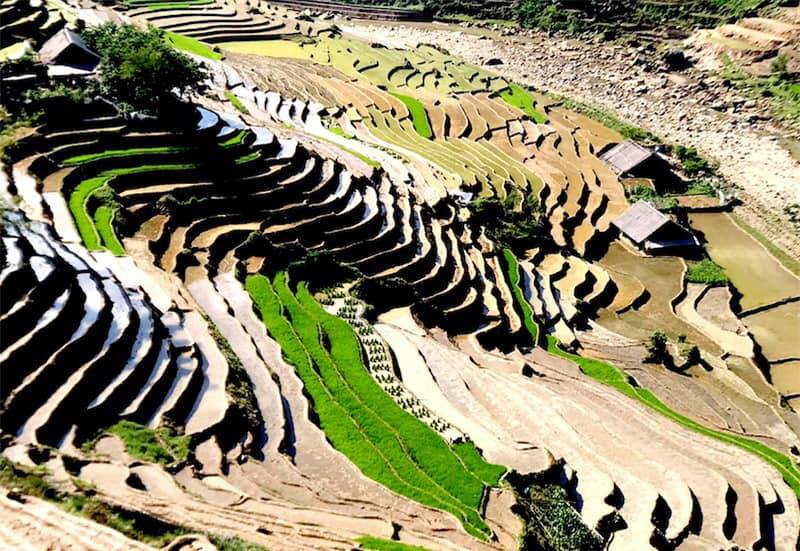

Sa Pa during the water-over season appears like a watercolor painting, with shimmering hues under the summer sun. Visiting Sa Pa in May, you will have the chance to witness a stunning natural landscape that appears only once a year.

Mesmerizing Sa Pa in the water-over season
Sa Pa always leaves a deep impression on visitors with its misty dawn, rustic villages, and majestic mountains.
Every May, the breathtaking scenery of Sa Pa is painted with rice paddies flooded with water. Under the bright summer sunshine, these fields shimmer more brightly, presenting a poetic and romantic beauty.
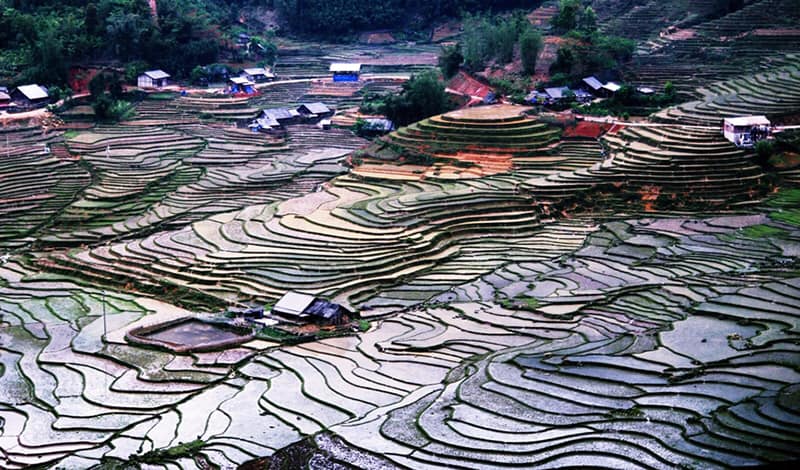
The flooded rice terraces
The water-over season in Sa Pa has a very distinct, wild yet simple beauty, still retaining the rugged majesty of the mountainous terrain. When traveling to Sa Pa in May, remember to explore the terraced villages to capture unforgettable photos during the flooding season.
Unlike plains, the people of Sa Pa and Lao Cai only cultivate rice once a year due to the challenging terrain and weather conditions. When summer arrives, the rice fields in Tả Van, Lao Chải, Tả Giàng Phình, Suối Thầu, Nậm Cang, Nậm Sài, Sín Chải, Ý Lình Hồ, and other villages are carefully prepared cleaned and plowed to ready for the new planting season.

The watercolor scene of the water-over season in Sa Pa
The characteristic of the terraced fields in Sa Pa is their rectangular, curved shapes, stacked like giant stairs amid the forested mountains. During the rice ripening season, these “natural stairs” turn a vibrant golden yellow. During flooding, each step reveals a different patch of color, creating a sparkling multicolored scene under the sunlight.
In summer, heavy rains provide ample water for planting and rice cultivation. Each flooded field acts like a giant mirror, reflecting the sky and creating a conducive environment for farmers to begin planting a new crop.
In Sa Pa, there is almost no fixed pattern to the shapes of the terraces. Depending on the natural terrain, local farmers “sculpt” the fields into various sizes and shapes. Sometimes they form perfect circular curves from top to bottom, other times, unique and whimsical shapes of water-filled patches. Despite the differences in shape, most terraces are well-watered, which softens the soil, supplies nutrients, and supports rice growth. Farmers then proceed to plant rice on their fields, resulting in a mosaic of colors when viewed from above.

Farmers working on the terraced fields
In aerial shots taken by drones, you will see the faint green of young rice shoots blending with the shimmering gray of unplanted fields. Small traditional stilt houses are nestled among these uniquely shaped terraces, creating a vibrant, enchanting landscape that captivates first-time visitors admiring the stunning rice terraces.
The water-over season in Sa Pa usually lasts from May to June, when locals have completed their water storage and have moved water to different fields. This period provides ample opportunity for travelers from all over to visit the villages and admire the spectacular beauty of the flooded terraces.
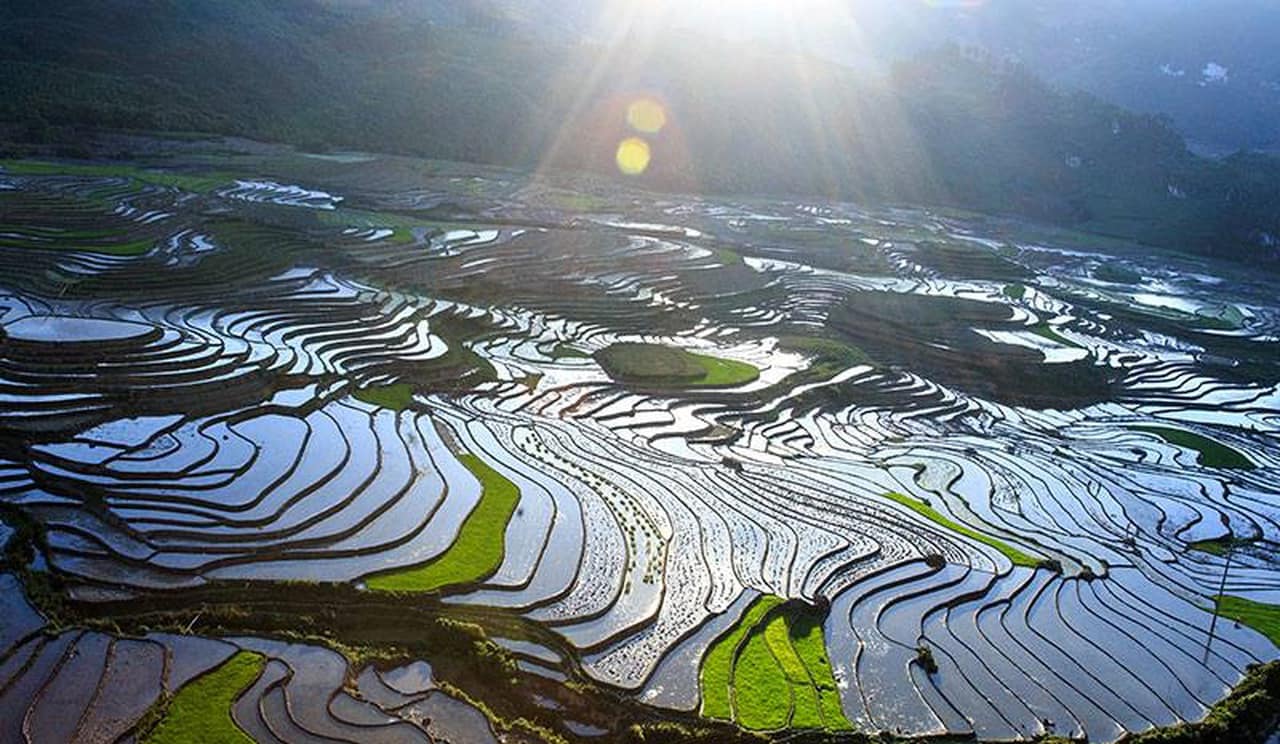
Sunset reflections
Amid the majestic mountain scenery, these rice terraces resemble a giant mirror. When the golden sunlight bathes the water surface, each flooded field seems to glow, shining like precious gems.
Traveling to Sa Pa during the water-over season, you not only get to enjoy the unique scenery that appears only once a year on the rice terraces but also witness the hardworking farmers planting rice. The simple beauty of labor amidst the stunning mountain landscape is a perfect opportunity for travelers to capture many beautiful photos.
Especially when visiting famous villages like Tả Van, Lao Chải, Nậm Cang, visitors can also learn more about the local life. Don’t worry about what to do in Sa Pa, as the area offers a variety of exciting activities. Strolling along peaceful village roads, admiring traditional stilt houses, and observing local weaving and tailoring are wonderful experiences that you won’t find in the plains.
These villages have developed tourism strongly, making it easy to find cafes and eateries to relax or enjoy local specialties. Additionally, you can choose to stay with local families to get a more authentic experience of rural life in the mountains.
0 Comment