


The cultural characteristics of each ethnic group are not only expressed through festivals with songs and dances but also through traditional culinary arts. For the Tày community, five-colored sticky rice is an indispensable dish during festivals, New Year celebrations, and communal gatherings. This dish symbolizes the five elements and reflects the hope for good luck and prosperity.
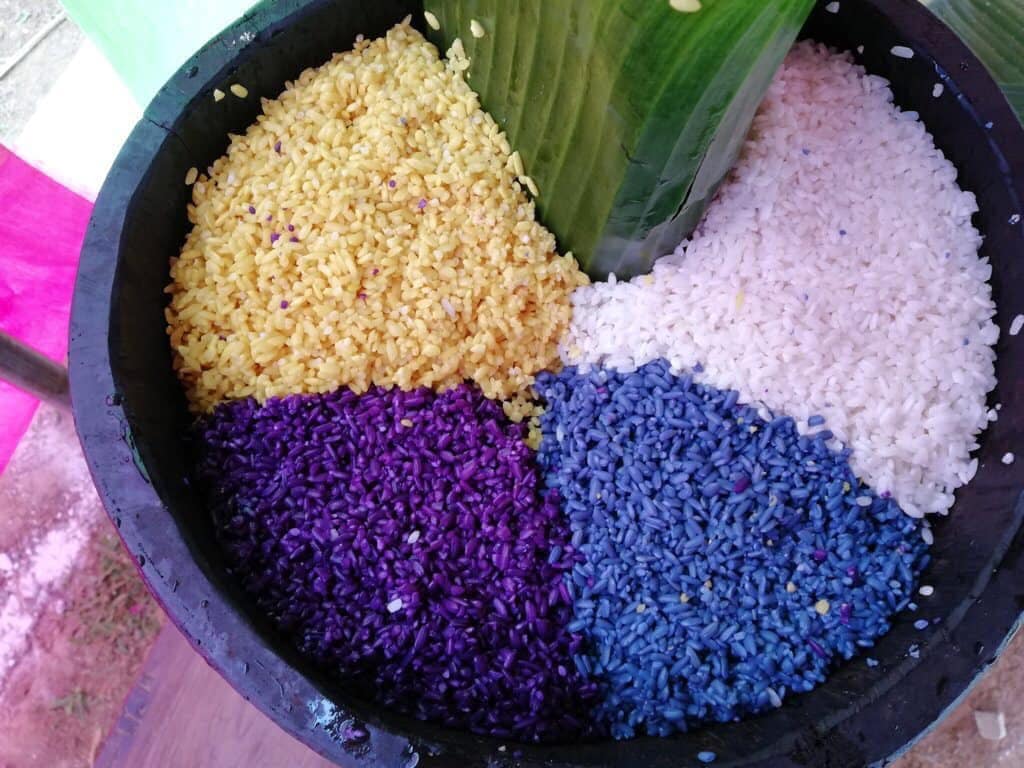
Cooking the Rice
Five-colored sticky rice is one of Sa Pa’s specialties that visitors should try at least once. The rice has a rustic flavor, is not only delicious and visually appealing but also carries profound symbolic meanings.
The dish features five different colors: red, yellow, green, purple, and white. According to the beliefs of people in Northwestern Vietnam, five-colored sticky rice represents a longing for love. It expresses respect for mothers, filial piety to fathers, unwavering love between partners, and also symbolizes good luck and well-being.
Each of the five colors carries its own meaning:
- Red symbolizes vitality and dreams of a bright future.
- Yellow signifies abundance and prosperity.
- Green represents the forests and mountains of Northwestern Vietnam, including trees, lush jungles, and terraced fields.
- Purple denotes the fertility of the land.
- White symbolizes pure, steadfast love.
Ingredients:
To make five-colored sticky rice, the main ingredient is fragrant Muong Bo glutinous rice, which is soft, sticky, and free of mixed grains. The rice is mixed with various forest leaves to dye the different colors.
Preparation:
Preparing this dish is quite elaborate. Before dyeing, the glutinous rice must be washed thoroughly and soaked in water for 6–8 hours. Then, the rice is divided into five parts, each corresponding to a different color.
- The red color is achieved using gac fruit or red rice leaves.
- The green is dyed with ginger leaves or citrus peel.
- The yellow comes from crushed turmeric root water.
- The purple is obtained from purple rice leaves, and charcoal from burnt straw is used for some shades.
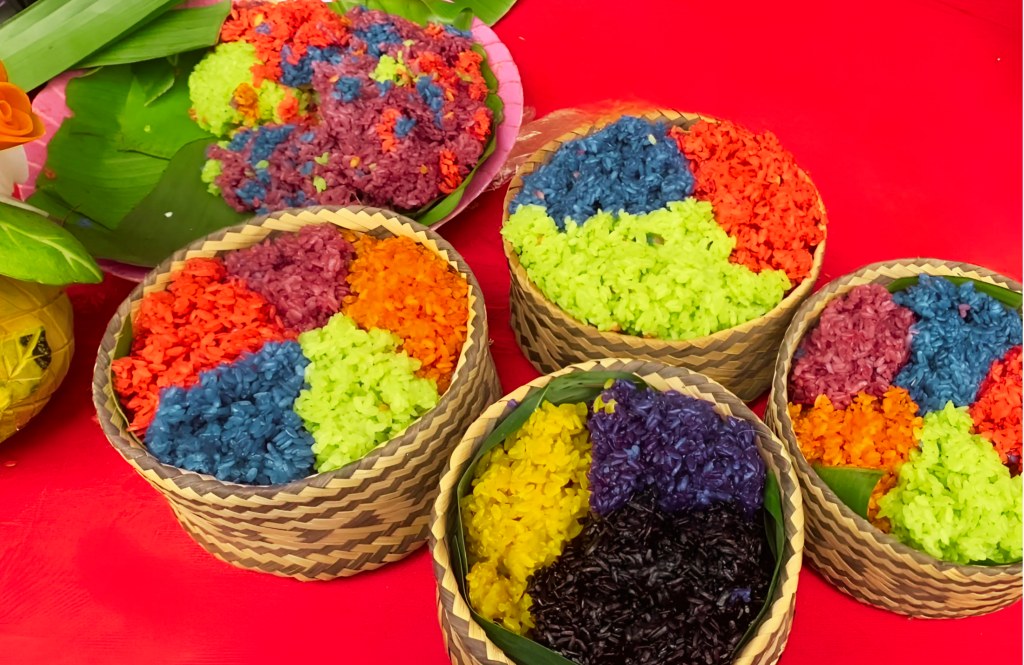
Five-Colored Sticky Rice
The Tày people in Sa Pa cook five-colored sticky rice based on traditional folk experience, resulting in a fragrant, rich, and enticing flavor. Moreover, since the dyes come from forest leaves, they have medicinal properties that can aid digestion and are very beneficial to health. The Tày also believe that if the rice dish is beautifully and perfectly colored, it reflects skillfulness and will bring prosperity and success in business.
The Tày community prepares five-colored sticky rice during ancestral worship rituals, housewarming ceremonies, or during annual festivals such as the fifth day of the fifth lunar month and the full moon of the seventh lunar month.
However, if you are traveling in Sa Pa, you can easily enjoy five-colored sticky rice at local markets or along the culinary streets of Sa Pa.
Conclusion:
If you want to taste this unique dish along with other delicious foods in Sa Pa, what are you waiting for? Grab your backpack and come here as soon as possible!
0 Comment