

According to the Xá Phó language, the mouse is called “A hi” and it is an indispensable offering during the traditional Tet of the Xá Phó people. It also serves as a special gift used as a bride-price during weddings… To fully understand the interesting stories about mice in daily life as well as in the spiritual rituals of the Xá Phó community, we invite you to join Original Sa Pa in Mường Bo commune, Sa Pa town, to explore this unique cultural feature.
When mentioning the animal at the top of the 12 zodiac signs, people often think of rodents, known for damaging crops, eating corn and rice, as well as other household items… However, among the Xá Phó people in Mường Bo (Sa Pa), Lào Cai, mice are considered sacred objects in their traditional spiritual rituals.
The story goes that, long ago, a great flood submerged the heavens and all living things on Earth. Only two siblings from the Xá Phó community survived by hiding inside a large gourd. When the waters receded, the gourd drifted into a cave. The older brother suddenly remembered his parents’ final instructions: “You must try to preserve the Xá Phó ethnic group.” However, after much thought, they didn’t know how to ensure their community’s survival, so the siblings parted ways—each heading in different directions to find their people. The brother headed north, and the sister headed south. They wandered endlessly, returning to the original place without meeting anyone… Desperate, they returned to the cave, and eventually, they “unavoidably” became husband and wife. Due to extreme poverty and the lack of a wedding ceremony, they simply lived together.
One day, a mouse ran past their cave. The husband immediately thought of using the mouse as a substitute for pork in a ritual to honor their ancestors and the heavens and earth. He caught the mouse, dried it, and chopped it into small pieces to be placed in nine bamboo tubes as an offering… Since then, mouse meat has become a staple in the wedding ceremonies of the Xá Phó people.
Mouse meat also became an essential dish in ancestral offerings during the traditional Tet celebration of the Xá Phó. They believe that on Tet, without mouse meat on the altar, their ancestors would not bestow blessings; during weddings, without mouse meat in the offerings, the bride would not be allowed to be received. Therefore, the Xá Phó community in Sa Pa and Lào Cai has preserved and promoted this unique cultural tradition to this day.
To prepare mouse meat for offerings during Tet, the Xá Phó people usually hunt mice from September to November lunar calendar. According to elders, they prefer to hunt on Dần days and hours, and on Mão days and hours, because during these times, mice search for food more actively, making traps easier to set. Before hunting, they pray to their ancestors to bless their trapping efforts. They carefully observe the mice’s paths in bamboo forests or near fields to set traps. They use bamboo traps, not iron traps, because they believe that iron traps are not sacred and would not be approved or blessed by their ancestors. When someone in the family goes into the forest to hunt mice, outsiders are not allowed into the house, women are not permitted to embroider or weave, and children must avoid noise and playing. After setting the traps, the person must sleep in a hut, lying on one side without turning over. After three days, they collect the traps, bring the mice back, roast and smoke them over fire, then hang them in the kitchen to dry. During roasting, they avoid blowing on the fire, believing that doing so would prevent them from trapping mice the following year.
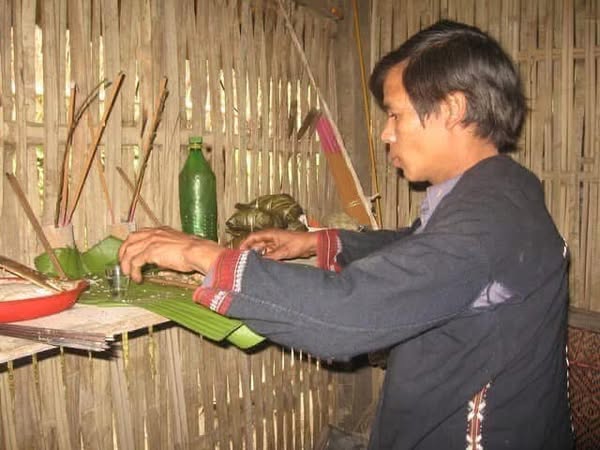
During Tet, according to Xá Phó customs, from the 4th day of Tet until the end of January, each lineage chooses an auspicious day to present the offerings of mouse meat to their ancestors. Usually, the Lí (Lý) lineage chooses a Thìn day, the Nìu lineage a Dậu day, and Tý days… They cut the mouse meat into small pieces and arrange it on a wooden tray lined with banana leaves, along with two large bowls of deer wine and four small bowls of rice wine. During the offering, men sit in the main room in front of the ancestor altar, while women sit in the adjacent room on the west side. They place a tray of mouse meat, sweet potatoes, reed flowers, bamboo shoots, sticky rice, and plain rice. After preparing the offering tray, they pray to their ancestors, offering their sincere hearts, and always wish for their ancestors’ protection, good health, successful hunting, bountiful harvests, prosperous living, and all good things in the new year.
On your trip to Sa Pa, if you have the chance, visit Mường Bo commune to learn more and listen to elders explain why the Xá Phó people eat mouse meat and why it holds such a special significance in their lives.
0 Comment