
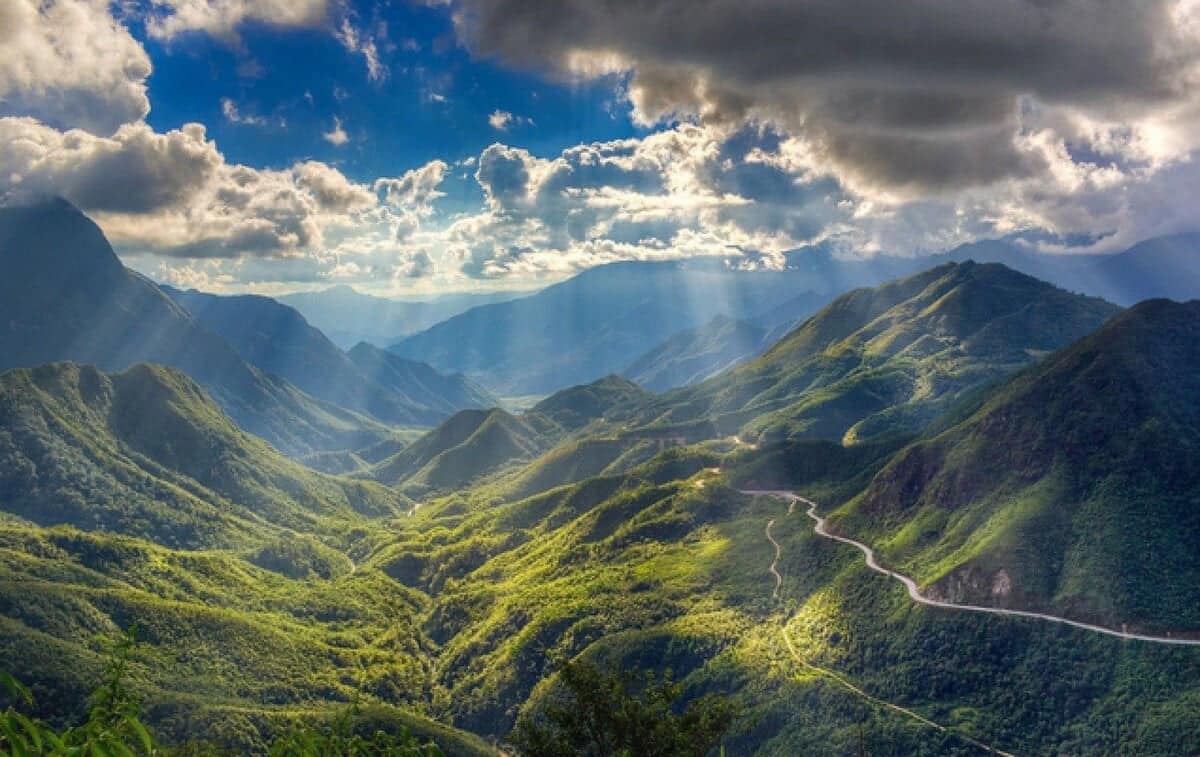

Vietnam, a S-shaped country, winding through treacherous yet majestic mountain roads, has become an endless source of inspiration for travel lovers. Among these, Ô Quy Hồ Pass, also known as the “King of Northwestern Passes” or “Cloud Pass,” stands out as a legend and an enchanting challenge.
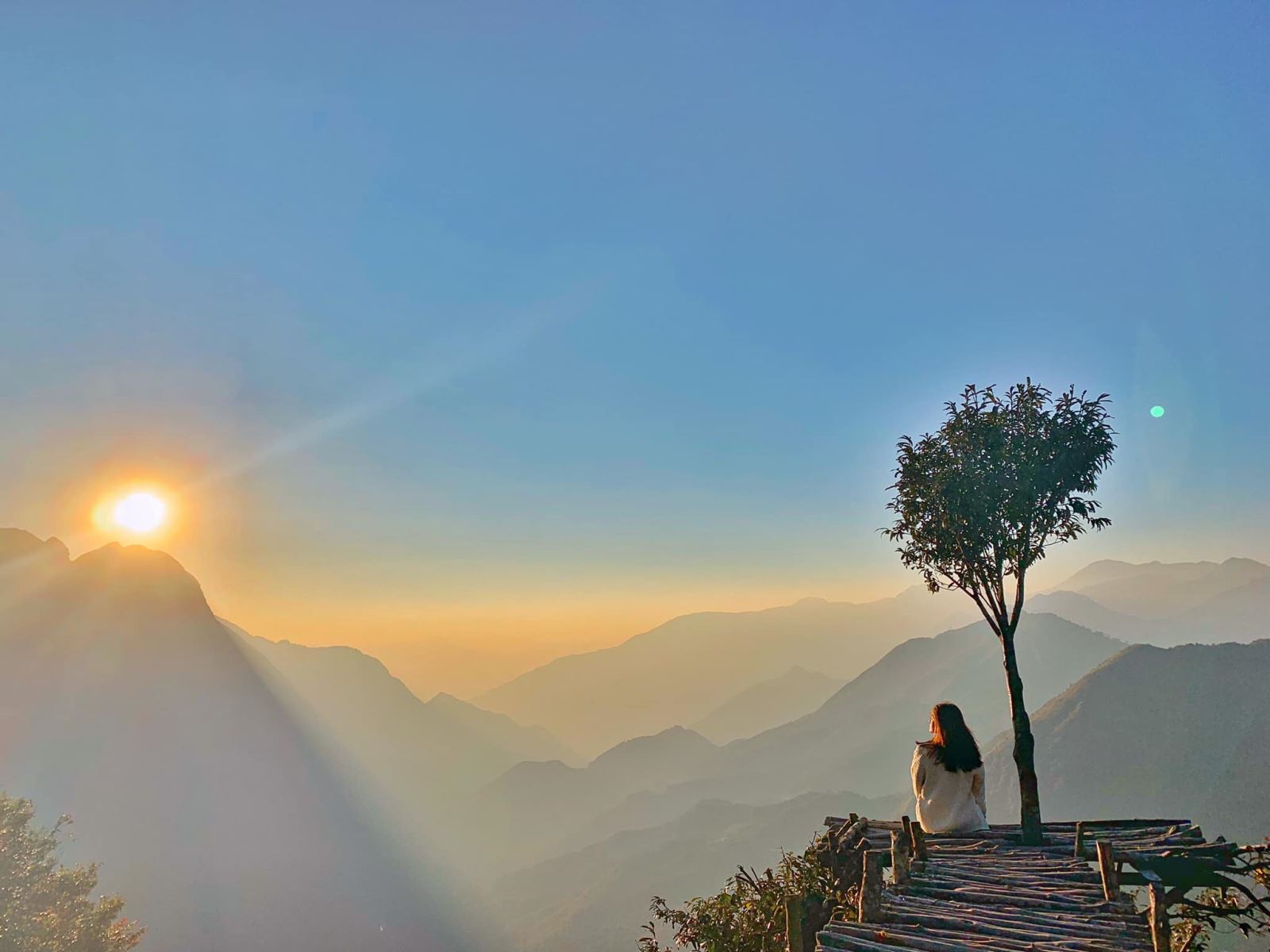
Sunset atop Ô Quy Hồ Pass
This is also an unmissable destination for those seeking to conquer the pristine, majestic beauty of the Northwestern mountains and forests. Spanning nearly 50 km and connecting Lao Cai and Lai Châu provinces, Ô Quy Hồ is not only Vietnam’s longest mountain pass but also a place that embraces endless clouds and mist, painting a stunning natural picture that captivates every visitor.
The journey to conquer Ô Quy Hồ begins from the poetic, misty town of Sa Pa. Following National Highway 4D, the road gradually ascends, winding through steep cliffs and numerous sharp turns that test any driver’s skill. As you go higher, the scenery changes—from lush terraced rice fields extending to the horizon, to villages hidden in early morning fog, and dense, untouched primeval forests.
What makes Ô Quy Hồ special isn’t just its altitude or rugged terrain but also its “specialty”: the clouds. The clouds here are not drifting lazily but are swirling seas of mist, billowing and wrapping around mountain peaks and winding roads. Standing at the top of the pass, at nearly 2000 meters above sea level, visitors feel transported to a fairyland, surrounded by white, hazy clouds. It’s like touching the sky, breathing in the cool, fresh air, and witnessing golden sunlight piercing through thick clouds, creating magical streaks of light—an unforgettable experience.
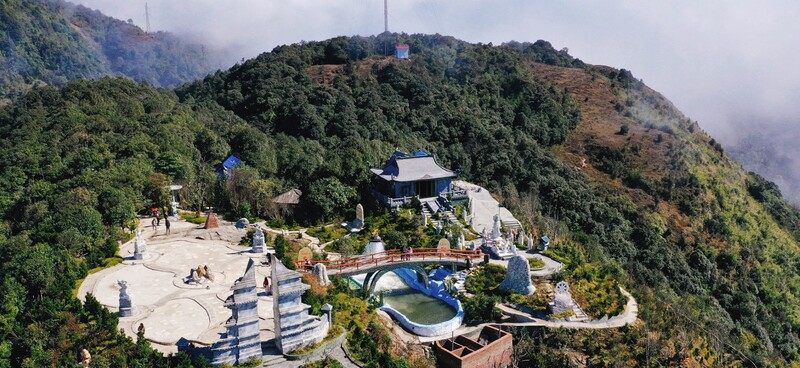
Heaven’s Gate of Ô Quy Hồ
A must-stop point along the Ô Quy Hồ route is the Heaven’s Gate (Cổng Trời). Considered the highest point of the pass, it offers the most panoramic view. From Heaven’s Gate, visitors can gaze far into the distance, admiring the majestic mountain ranges, deep valleys, and small villages hidden in the mist. On clear days, you can even see Fansipan Peak—the “Roof of Indochina”—standing tall and majestic amidst the sea of clouds.
Beyond its scenic beauty, Ô Quy Hồ is also intertwined with legendary stories and thrilling tales. Its name originates from the crying call of a bird, linked to a tragic love story of a fairy girl and a woodcutter. Legend has it that the fairy, captivated by the sound of the woodcutter’s flute, descended to the mortal world, but their love was forbidden. She had to return to the heavens, leaving the lonely woodcutter behind on the mountain peak. The poignant cry of the Ô Quy Hồ bird is said to be the voice of the woodcutter’s longing, forever searching for his beloved.
Ô Quy Hồ isn’t just an ideal destination for those passionate about exploration and conquering nature; it’s also a place to find peace and tranquility within oneself. Stopping at a small roadside café, sipping hot tea while watching clouds drift lazily, listening to the wind whisper through rocky cliffs, visitors can feel relaxed and at peace, casting aside daily worries and stresses.
Conquering Ô Quy Hồ is not easy, but the beauty and experiences it offers are truly worth every effort. It’s about the majestic, pristine landscape of Northwestern mountains, the thrill of overcoming challenges, unforgettable adventures, and moments of calm and serenity amid vast nature.
Ô Quy Hồ, the legendary route where clouds embrace Northwestern Vietnam, will surely leave deep impressions on every traveler’s heart and ignite a longing to return—to immerse oneself once again in the breathtaking beauty of nature.
If you have the chance to visit Northwestern Vietnam, don’t miss the opportunity to conquer Ô Quy Hồ—the longest mountain pass in Vietnam—where the clouds embrace the mountains. Feel the wild, untouched beauty of the mountains and forests, and explore the legendary stories intertwined with this land and its people.
0 Comment