
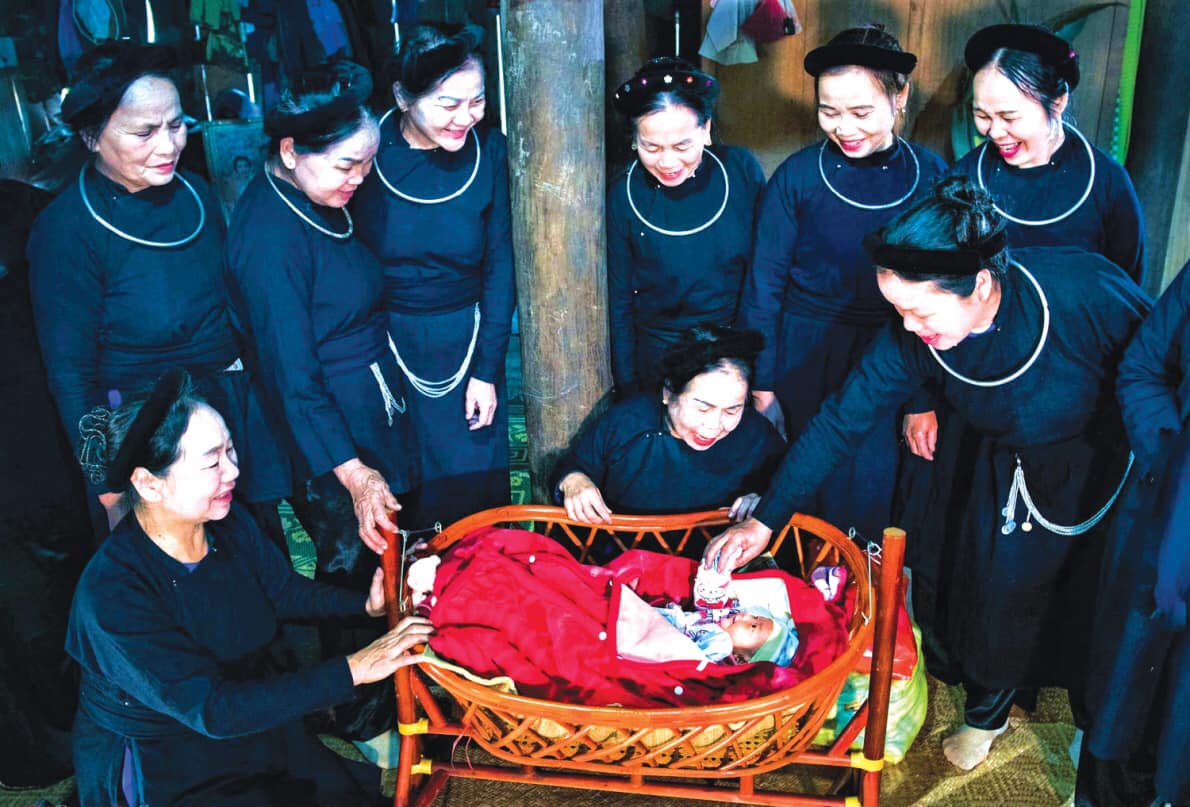

The full moon celebration is held when a child turns one month old. It is a very important custom of the Tày people, symbolizing joy for the family, happiness for the baby, and acknowledgment that the community has gained an additional member, living in the love and protection of everyone. It also expresses hopes for the child’s peaceful and meaningful life in the future. Through this article, I invite you to explore this meaningful tradition with Original Sa Pa.
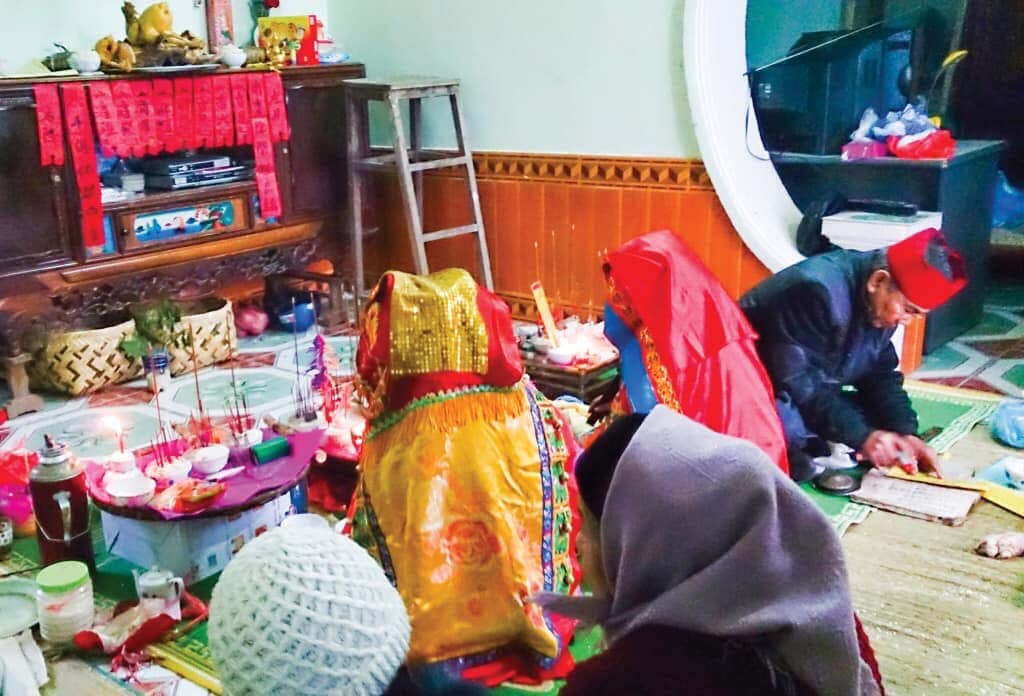
The Spiritual Ceremony Conducted by bà Then in the Full Moon Celebration
The full moon celebration is called “Kin bươn” by the Tày people in Sa Pa. For the firstborn child, families regardless of wealth or poverty, whether the child is a girl or a boy organize this full moon ceremony. The scale of this celebration is usually only slightly smaller than a wedding, involving both the maternal and paternal sides of the family.
The celebration is held at the paternal house, but both sides of the family collaboratively discuss and prepare all aspects. The paternal side prepares items such as a cradle rope, a baby carrier, a bag for belongings and books, a pen (symbolic), and food for the feast: pork, chicken, rice, alcohol, etc. Specially, they prepare glutinous rice for steaming and making traditional cakes. The paternal family actively chooses an auspicious date for the ceremony, focusing on spiritual aspects and gathering some materials according to Tày customs. After selecting a good day, they invite relatives, neighbors, and friends from the maternal side to attend the full moon celebration at the paternal house. The maternal side also actively chooses a day to weave the cradle and sew the baby carrier. The cradle is traditionally woven from split bamboo or rattan, often by the grandfather himself to ensure it is sturdy, beautiful, and free of pests. The baby carrier is a gift from the maternal grandmother and other relatives, made from traditional indigo-dyed fabric and ethnic brocade. Additionally, the maternal family prepares blankets, clothes, diapers, hats, shoes, and fabrics as gifts to celebrate the baby during the full moon.
The full moon celebration is divided into three main parts: the spiritual ceremony, traditional rituals according to customs, and the feast. Usually, bà Then performs the spiritual rites from the evening before until noon the next day after the feast concludes. An essential part of the spiritual ceremony is offering thanks and setting up the “Bà Mụ” altar. According to Tày beliefs, children are born thanks to Bà Mụ, who bestows beauty upon the world. In bà Then’s songs, she acknowledges Bà Mụ’s contribution:
“Golden flowers given by the mother / Silver flowers brought by the mother / So it grows into a girl / So it quickly becomes a boy”.
The ritual according to Tày customs is performed in the morning, typically starting around 8 a.m. with the participation of both maternal and paternal relatives. At that time, the congratulatory gifts from the maternal side are neatly arranged on a traditional bamboo mat in a prominent place inside the house. Gifts from others are presented to the baby during the “khai hảy” (crying ritual). At the scheduled time, the baby carrier is threaded through the carrier frame; the maternal family prepares a person (usually a beautiful, obedient, and studious girl) to carry the baby. Then, the grandmother takes down the carrier and holds the baby. The carrier person and close relatives line the cradle with diapers and blankets so that the grandmother can place the baby inside. The maternal and paternal grandparents then sing traditional lullabies to soothe the baby.
The full moon celebration is a beautiful traditional custom that many Tày families in Sa Pa still preserve today. It holds deep humanitarian meaning not only expressing good wishes for the child’s future but also demonstrating the family’s and community’s care, attention, and education toward children.
0 Comment