
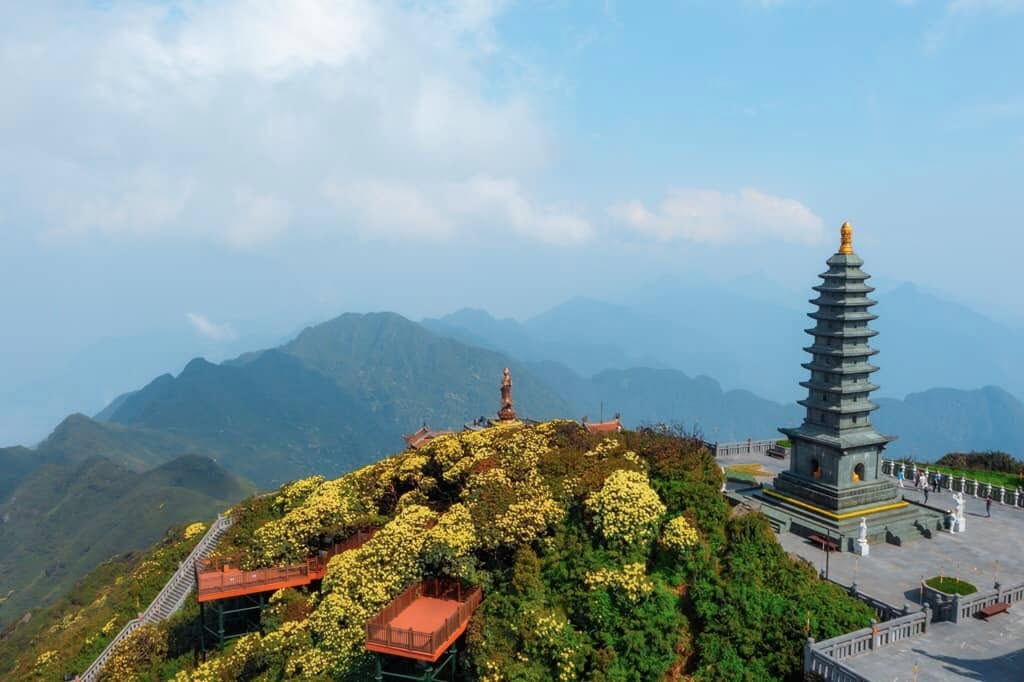

Many international travelers often describe Sa Pa as a captivating symphony of highland nature and culture in Northwestern Vietnam. Here, the vast, poetic, and majestic beauty of nature is complemented by vibrant colors of life and cultural traditions of ethnic minorities such as H’mông, Red Dzao, Tày, Giáy, Xa Phó, and others, creating a unique allure that makes this world renowned tourist town truly special.
Sa Pa – A Famous Tourist Destination in Northwestern Vietnam
Sa Pa is a well known tourist destination in the Northwest region. Lonely Planet once wrote: “The Hoàng Liên Sơn Range (Sa Pa) is known to international visitors as the Tonkinese Alps. The majestic mountains soaring into the sky are home to Fansipan Peak, Vietnam’s highest mountain. Visitors can immerse themselves in the beauty of winding, pointed mountain ridges, terraced fields descending into valleys, and villages of ethnic minorities such as H’mông, Red Dzao, and Giáy, rich in traditional cultural identity.”
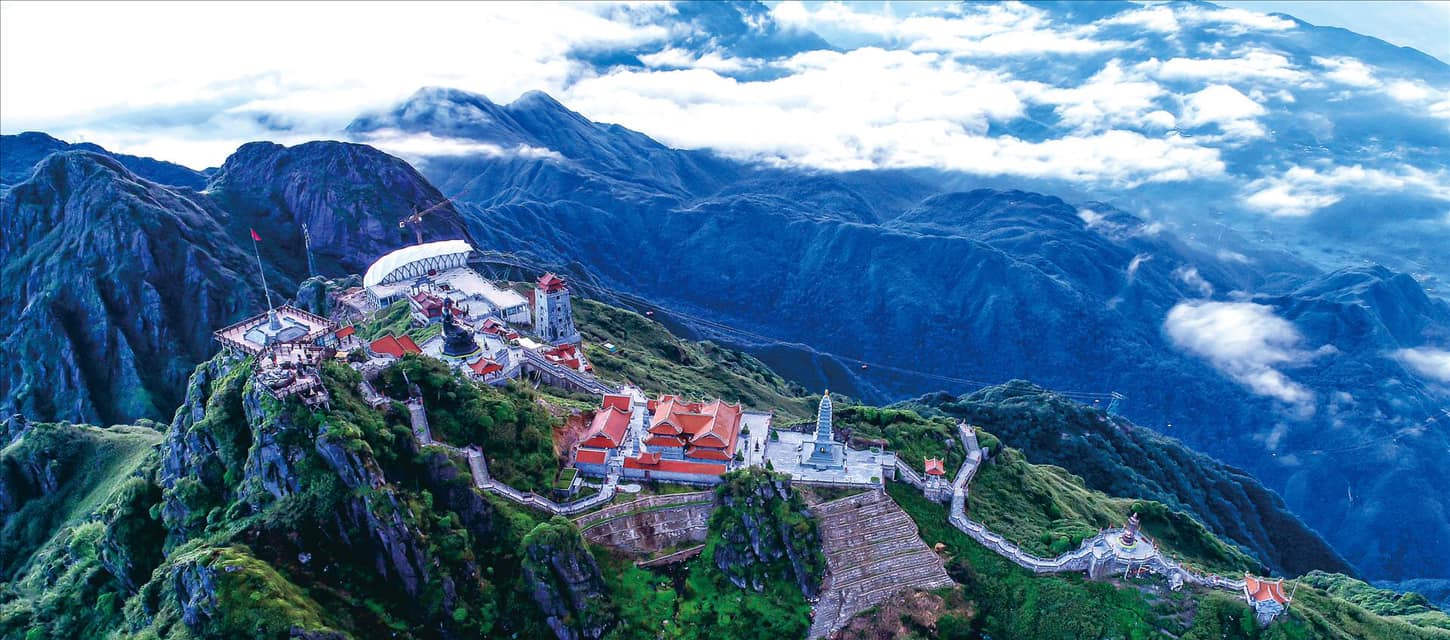
Fansipan Peak
When visiting Sa Pa, travelers will explore the breathtaking beauty of Fansipan Peak, standing at 3,143 meters, often called the “Roof of Indochina” At the summit, grand temples and pagodas have been built, rising majestically among clouds and strong winds. From the “Roof of Indochina,” visitors will experience a range of extraordinary emotions: sometimes clouds drift gloomily, sometimes fog obscures the path, and at times, fierce winds roar. Particularly, every morning, a river of clouds flows down from the mountain top into the center of Sa Pa, into Mường Hoa Valley, and into the villages, creating a poetic yet majestic natural scene. On Fansipan’s sacred summit, each season reveals different enchanting aspects that no other place in the S shaped land can match from the snow covered sacred sites in winter, to the mysterious and romantic nights under a sky filled with stars, to the golden hues of sunset reflecting on the floating clouds.
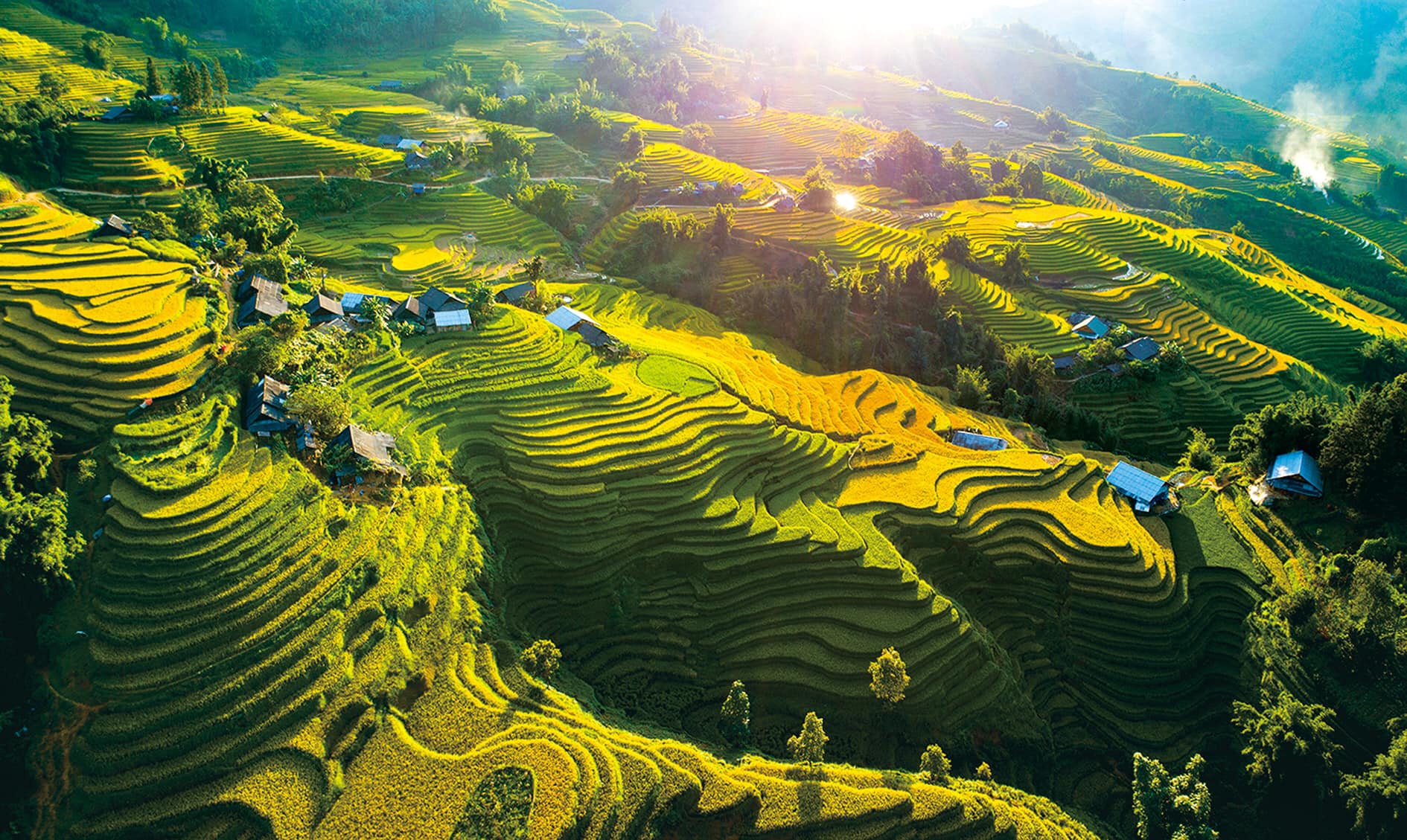
Terraced Fields of Sa Pa
The Mường Hoa Valley, located about 6 kilometers from Sa Pa town in Tả Van commune, attracts many visitors with its magnificent terraced fields blending seamlessly into poetic nature. Amidst the pervasive mist of earth and sky, the valley appears as a unique brushstroke, with each season touching the soul of visitors in different ways.
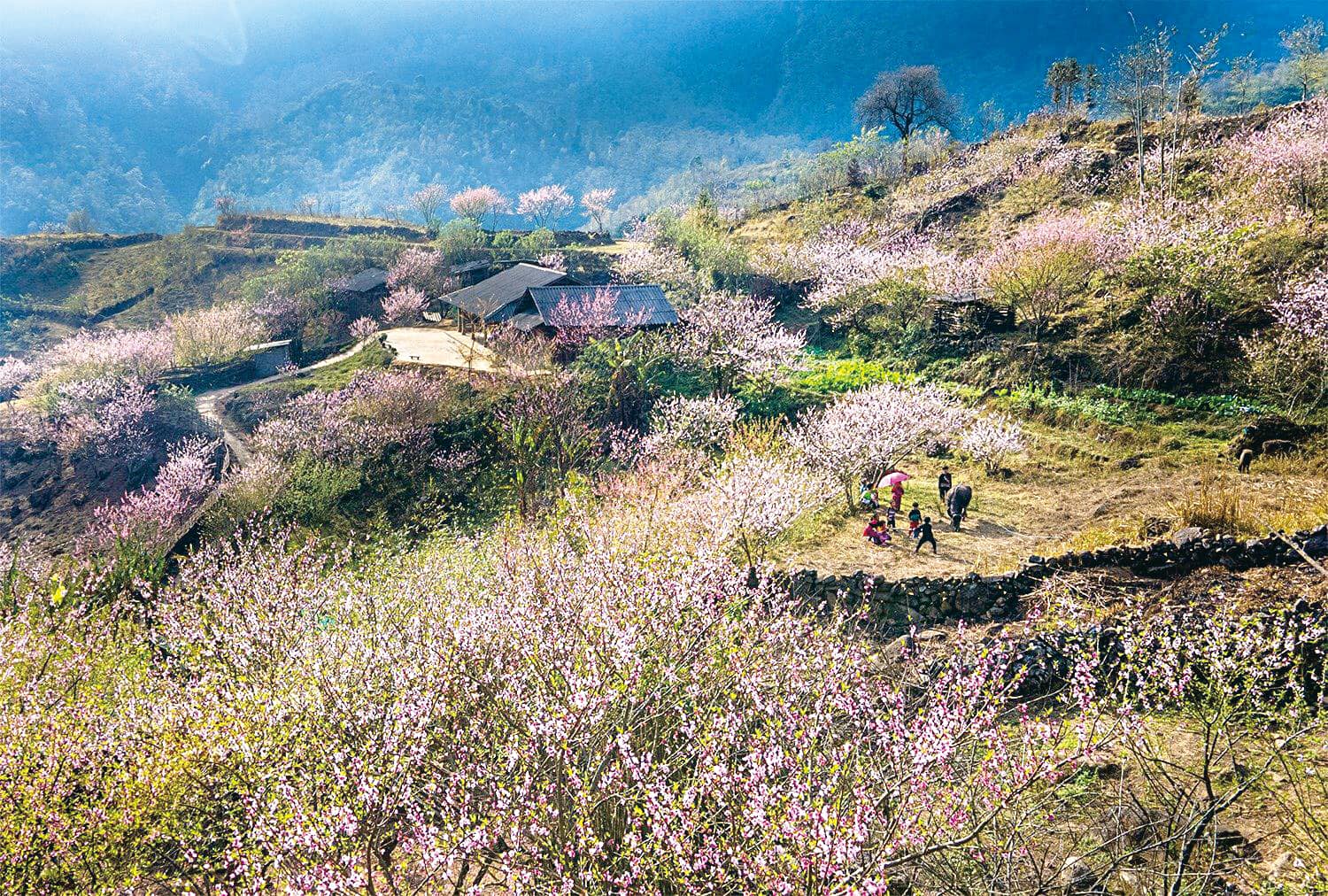
Scenes in Spring at Sa Pa
Spring in Mường Hoa dresses in the pure colors of peach blossoms, plum blossoms, and pear blossoms. In autumn, the valley shines with golden rice ripening on the world’s most beautiful terraced fields. In winter, visitors come here to “hunt for snow”, experiencing romantic and unfamiliar scenes that seem like they belong to “the Western sky”.
Nestled near the Hoàng Liên Sơn Range and adjacent to Mường Hoa Valley, Sa Pa displays a blend of ancient charm and modern vibrancy. With a history of 122 years of formation and development, Sa Pa’s historical footprints are preserved in relics such as Sa Pa Stone Church, Tả Phìn Monastery, and remaining French colonial architecture all contributing to the town’s poetic and fresh allure, captivating visitors’ hearts.

Sa Pa Stone Church
Located right in the town center, Sa Pa Stone Church was built by the French from 1926 and completed in 1935. It is nestled against the Hàm Rồng Mountain Range and serves as the main religious site for local Catholics, often called the “heart of the cloud covered town”.
Today, visitors to Sa Pa will be amazed by many newly built restaurants and hotels that feature French architecture from the previous century. Notably, the Hotel de la Coupole MGallery by Sofitel of Sungroup and PistaChio Sa Pa hotel stand out. The coexistence of old and new architecture combined with the poetic natural scenery creates a famous, ever-fresh Sa Pa in the clouds a beautiful muse that remains alluring to visitors.
Exploring Villages in Sa Pa
Sa Pa is the long standing home of various ethnic groups such as H’mông, Red Dzao, Tày, Giáy, Xa Phó, and Kinh. Each group has its own customs, traditions, and cultural features, making every visit intriguing and captivating.
The H’mông are the largest ethnic group, accounting for over 52% of the population. A famous tourist spot is Cát Cát Village, primarily inhabited by H’mông people. This ancient village still preserves traditional crafts like cotton weaving and jewelry making. Visitors can learn about daily life, observe how traditional costumes are made, and enjoy local specialties from the Northwest such as thắng cố (horse meat stew), black chicken, local pork, and corn wine.

Festivals of the Ethnic Minorities in Sa Pa
The festivals here are colorful and deeply rooted in ancient beliefs. They usually take place in early spring within individual villages, but in Mường Hoa, some festivals extend across larger areas or entire old communes.

Gầu Tào Festival of the H’mông
The H’mông celebrate Nào Sồng (Oath of the Year) on the first day of the lunar new year in the forbidden forest of the village.
Similarly, the Dao hold the Nhặn Sồng festival in January, combining folk arts such as dance, music (war drums, marching, exorcism chants), and storytelling about the lineage of clans like Bàn, Triệu, Đặng, recounting ancestors’ deeds and legends of gods and spirits.
Roóng Poọc Festival of the Giáy People: This large scale festival attracts thousands of Giáy, H’mông, Dzao, and visitors in Mường Hoa Valley.
The Tày celebrate Mừng Bơ on January 7th with a gong dance to pray for favorable weather and bountiful harvests.
The Xa Phó in Nậm Sáng hold the Làng Quét (village sweeping) festival on the 2nd day of the lunar year, featuring rituals to ward off evil spirits and pray for safety.
Today, the scale of traditional festivals has expanded to attract more tourists, blending cultural preservation with tourism development.
The Rich Cultural Stories of Sa Pa’s Ethnic Communities: The fascinating stories about the cultural lives of local ethnic groups seem endless, as both tangible and intangible cultural values are still preserved and passed down by the people. All these cultural treasures await visitors’ discovery, for each day and season in Sa Pa is like a new “symphony,” with diverse sounds and melodies enchanting and captivating every time.
0 Comment