
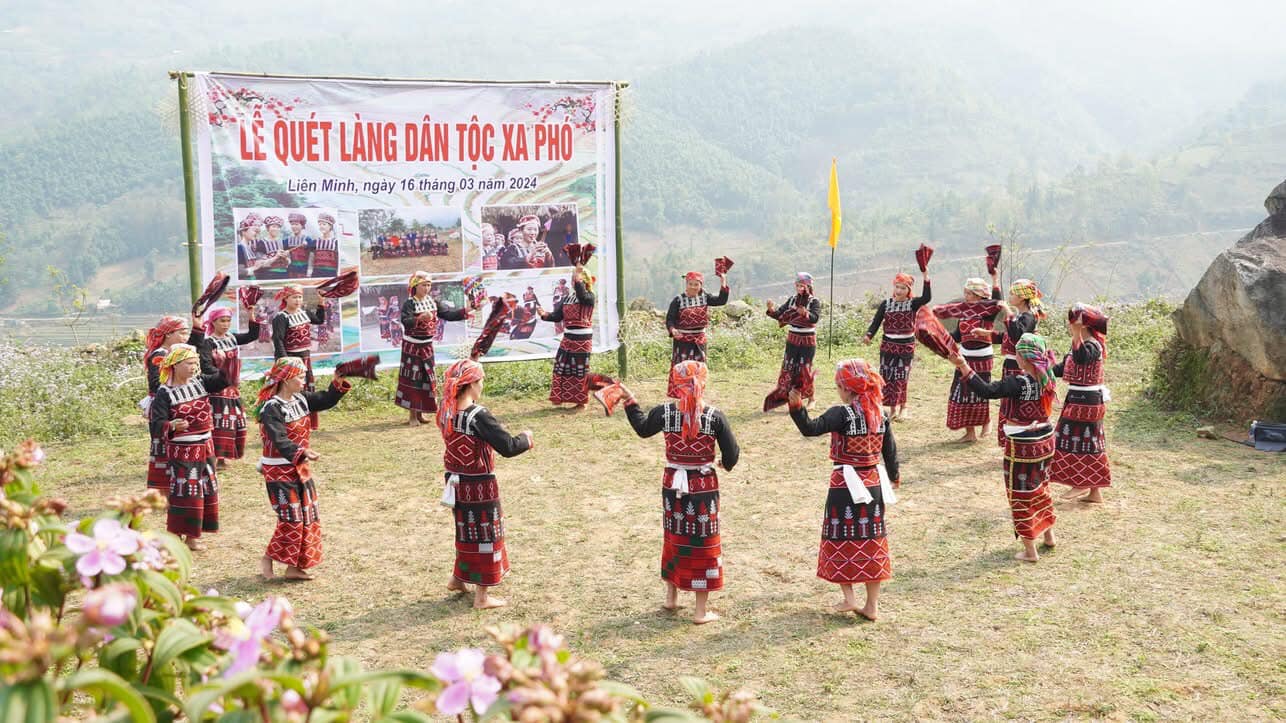

Every year, around the lunar month of February, the Xa Phó community in Mường Bo commune eagerly prepares for the village sweeping ritual. This is a distinctive communal offering ceremony held at the beginning of the year to ward off evil spirits and protect peace and prosperity for the local people. When the village sweeping festival takes place, it also marks the conclusion of the Spring Festival events. Let’s join Thổ địa Sa Pa – Original Sa Pa to explore this unique traditional ritual of the Xa Phó people in Sa Pa.
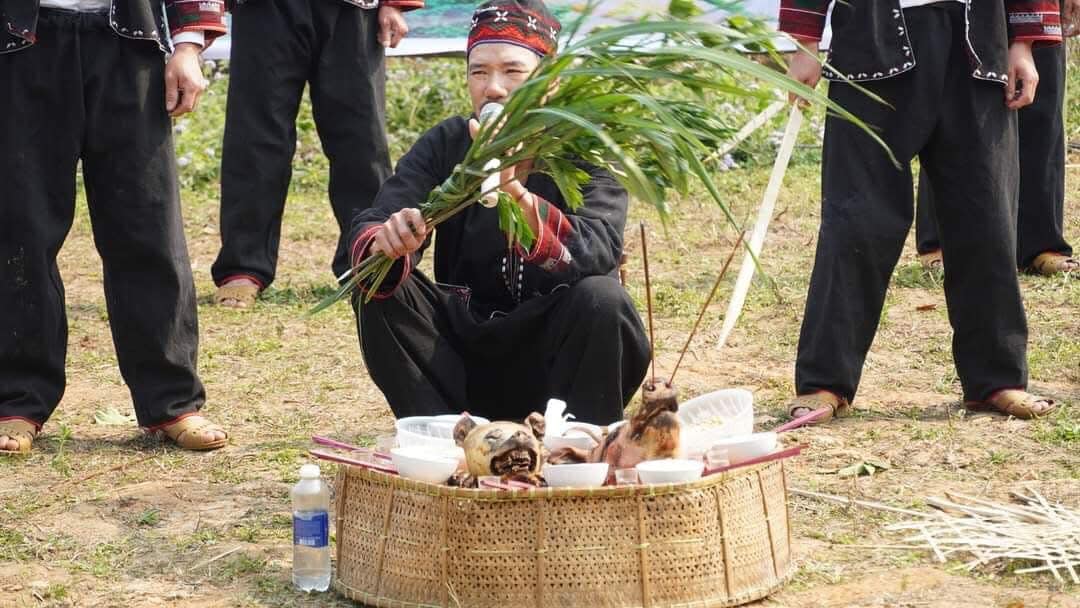
The shaman performing the ritual during the village sweeping festival
The Xa Phó are a subgroup of the Phù Lá ethnic group. They reside from the lowlands of Sa Pa to the upstream part of the Chảy River in Lào Cai province’s eastern region. The Xa Phó community is highly cohesive. Each village is an autonomous community managed by a council of elders representing the local clans. Particularly, they also hold a community offering ceremony called the “Village Sweeping” ritual. This annual ritual, conducted in the lunar month of February, aims to dispel evil spirits, prevent disease, and welcome a peaceful new year with good crops, health, and prosperity. It can be considered a major cultural festival of the Xa Phó community in Mường Bo (Sa Pa), Lào Cai.
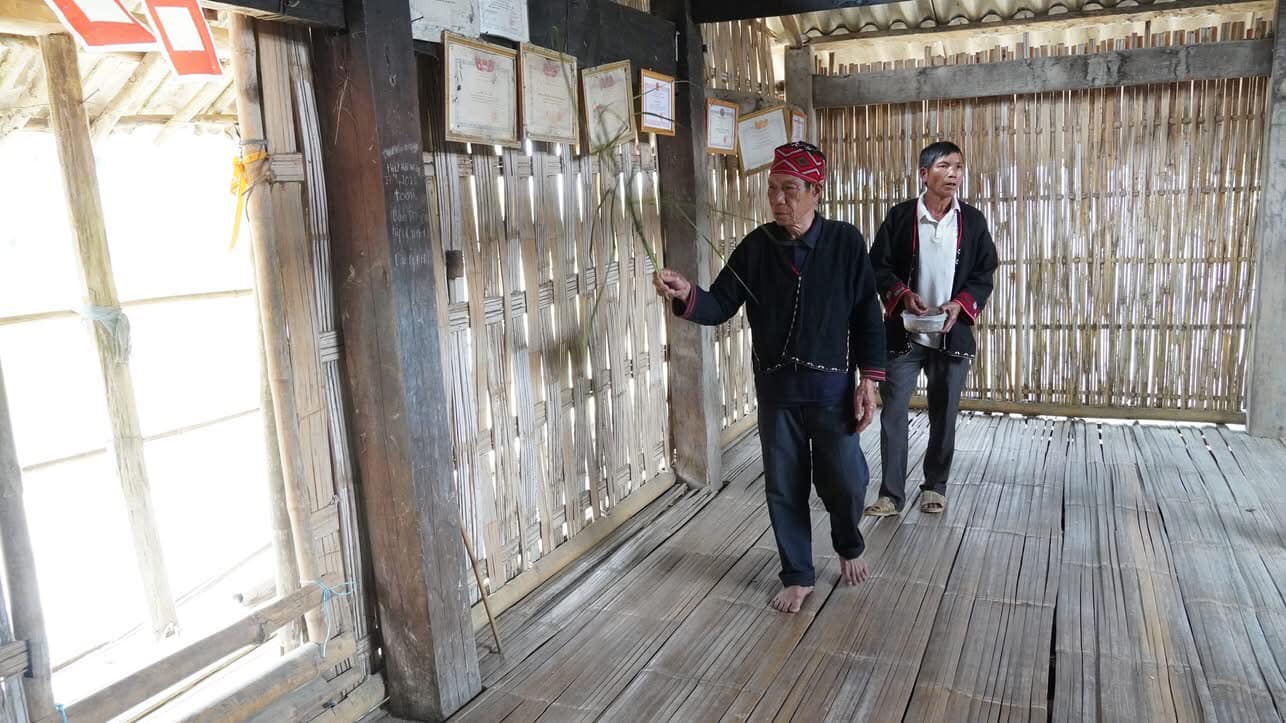
The shaman conducting the house ritual
According to legends, in ancient times, the Xa Phó villagers recount that February is the month when hungry ghosts come to destroy the village. During this month, the villagers’ lives are heavily affected by malevolent spirits people of all ages, from the elderly to children, suffer from illnesses and crop failures. At this time, a divine spirit is believed to come to aid the Xa Phó, prompting the community to hold a ritual to chase away evil spirits and pray for a peaceful life. Thus, the village sweeping (also called the “Ghost Cleaning Festival”) is a ritual to expel harmful spirits causing sickness and misfortune, and to welcome good fortune in the new year.
Before the festival day, representatives from each household gather at the village chief’s house to discuss and agree on the organization. They decide on the helpers for the shamans, the location, timing, and content of the ritual. Each family brings a bowl of rice, a chicken, money, two incense sticks, and a bottle of rice wine. Elder villagers note that households contributing dogs, pigs, or goats will be compensated by the community for their offerings during the festival day.
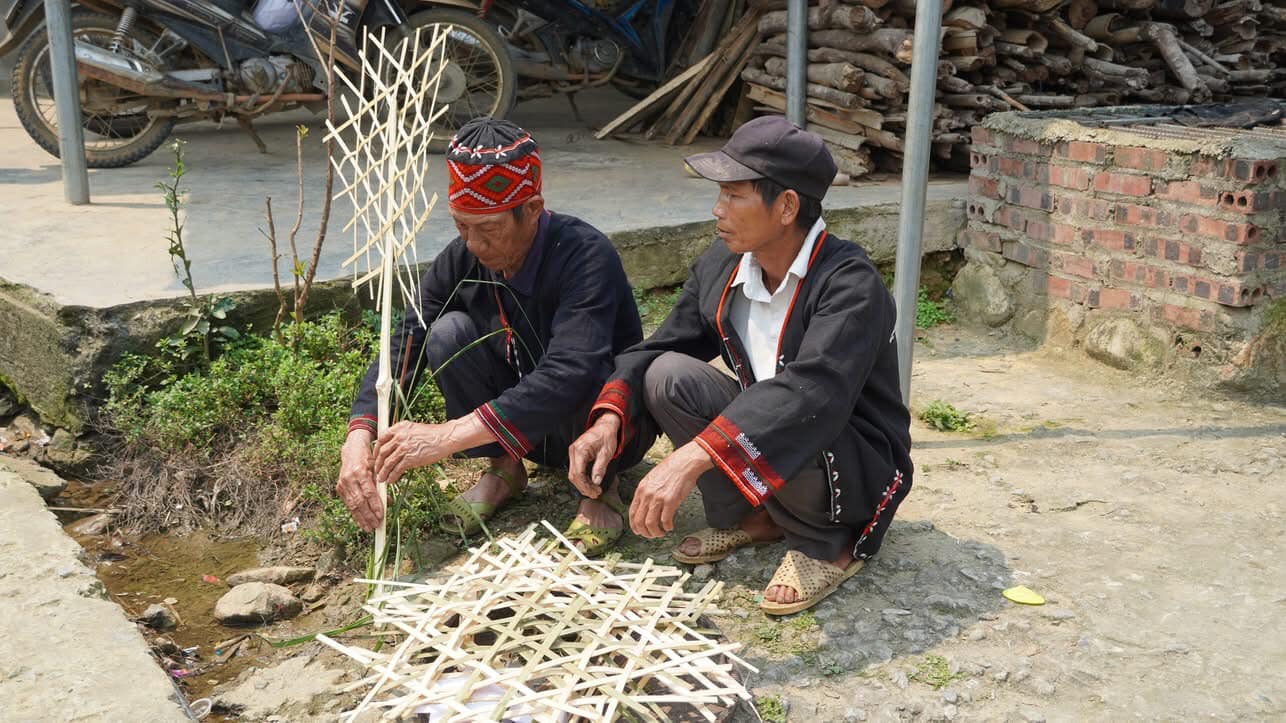
The shaman prepares a small wooden weapon to scare away evil spirits
In preparation for the village sweeping, male family members weave small bamboo screens from forest bamboo to serve as “weapons” for warding off spirits after the ritual. On the scheduled day, representatives from each household arrive with offerings at a designated open space at the village entrance. According to assigned roles, the healthy and agile men slaughter pigs, chickens, goats, and dogs. The shaman, holding a wooden sword and small branches with their faces painted black, visits each household to perform the ritual. At each house, the shaman pours a shot of rice wine onto the family altar while reciting the names of all family members. After the prayer, the shaman dances with the wooden sword inside the house, and a family member follows, holding corn cobs to scatter over the shaman’s head. Afterwards, everyone spreads blankets and mats at the village entrance, shaking them into a rattan boat symbolizing that all misfortunes of the year will flow away with the water.
The festival concludes with a lively gathering. Villagers organize folk games and cultural performances. The Xa Phó are passionate about arts, especially music and dance; this enthusiasm is vividly expressed during traditional festivals like the village sweeping. The graceful dances of the young women in traditional colorful costumes, combined with the sounds of flutes and the unique bells of the Xa Phó, leave a lasting impression on visitors.
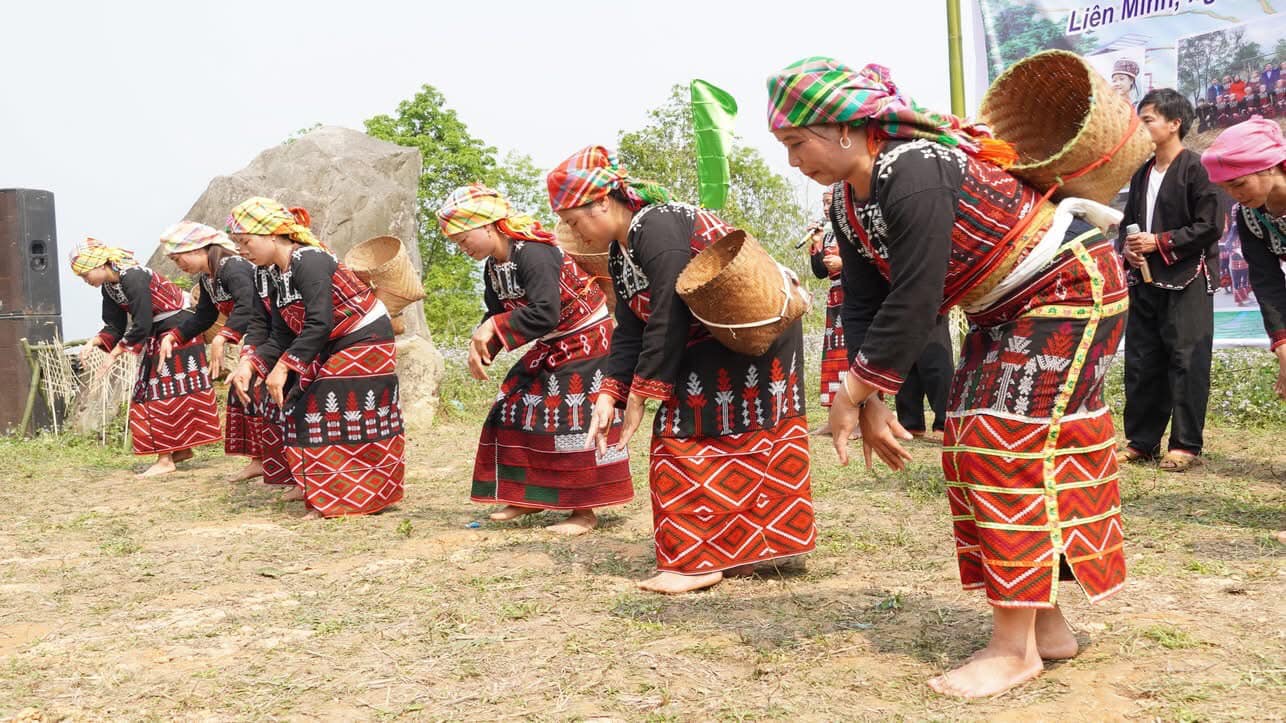
Traditional dance of the Xa Phó people
After the festival activities, residents and guests share a communal meal right at the village gate. All offerings to spirits must be fully consumed; nothing is left to carry home. Once the meal ends, the shaman stays behind, planting bamboo sticks around the ritual site, and placing dog tails and ears into the ground to prevent spirits from harming the villagers. The shaman then lights a fire, steps over it, and returns home. From that day, a three-day prohibition is observed: outsiders are not allowed to enter the houses or the village. After three days, daily life resumes normally.
The village sweeping ritual is simple but reflects the distinct cultural and spiritual beliefs of the Xa Phó people. It is a fascinating experience for those who love festivals and traditional culture. The annual village sweeping takes place on the 4th day of the lunar month of February at Nậm Sang village, Mường Bo commune (Sa Pa), Lào Cai province.
This festival coincides with the lively Spring Festival celebrations in the highland villages of Sa Pa, gradually drawing to a close so that local people can return to their usual productive routines. The cultural identity expressed through Spring Festivals is maintained, practiced, and passed down through generations, creating a strong cultural and spiritual highlight in modern life.
0 Comment