

Sa Pa is famous for its sparkling, unique, and poetic scenery. During the ripe rice seasons, blooming peach and plum flowers, traditional dance performances, and the cultural customs of the Red Dao people all contribute to attracting visitors from afar when they come to explore this land.
In the Sa Pa area, the three main ethnic groups are Hmong, Red Dao, and Tày. Each group possesses distinctive cultural traits that appeal to tourists from other regions. Among them, Ta Phìn village is a densely populated settlement of Red Dao people, where many unique traditions are preserved, making it a popular destination on Sa Pa tours.
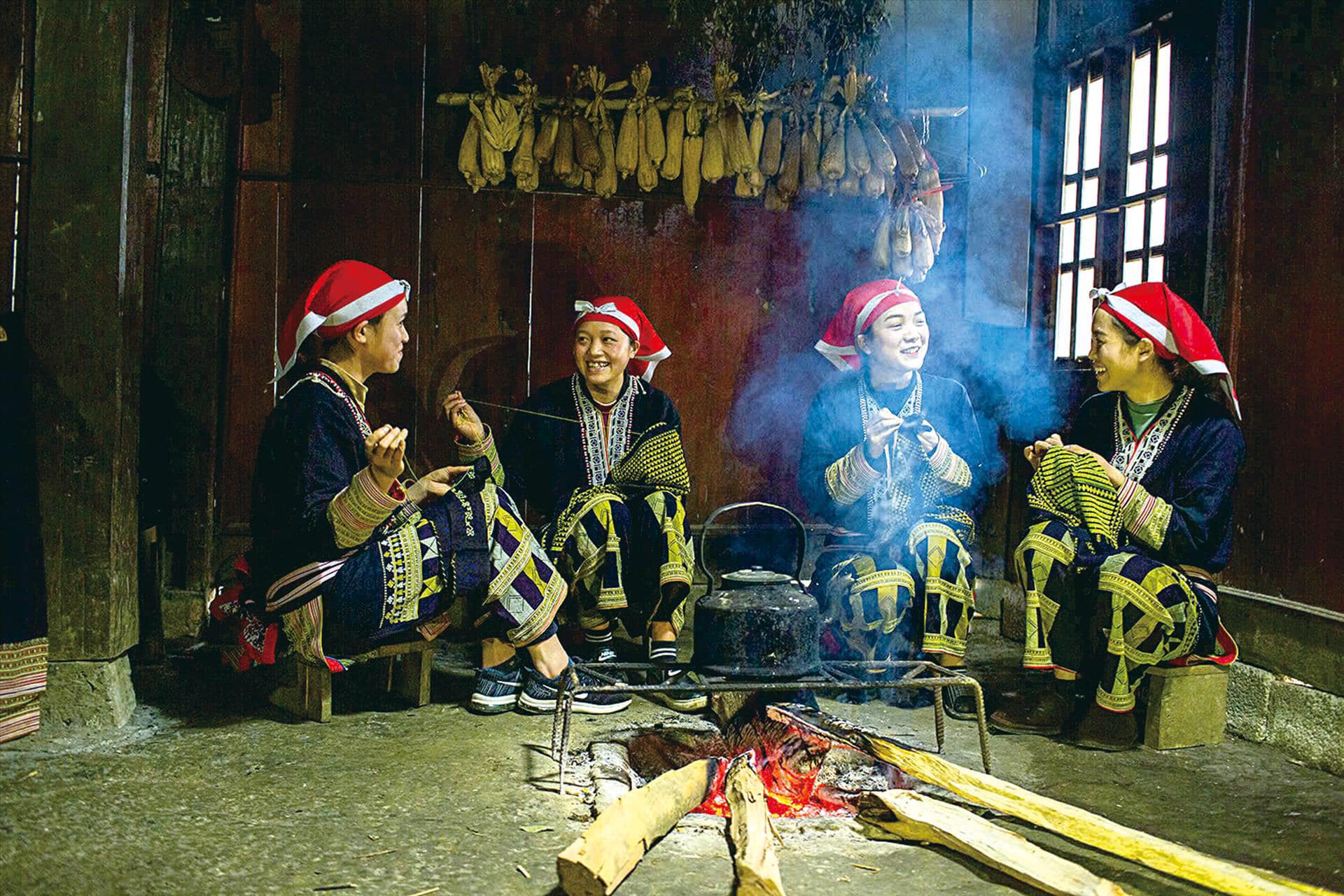
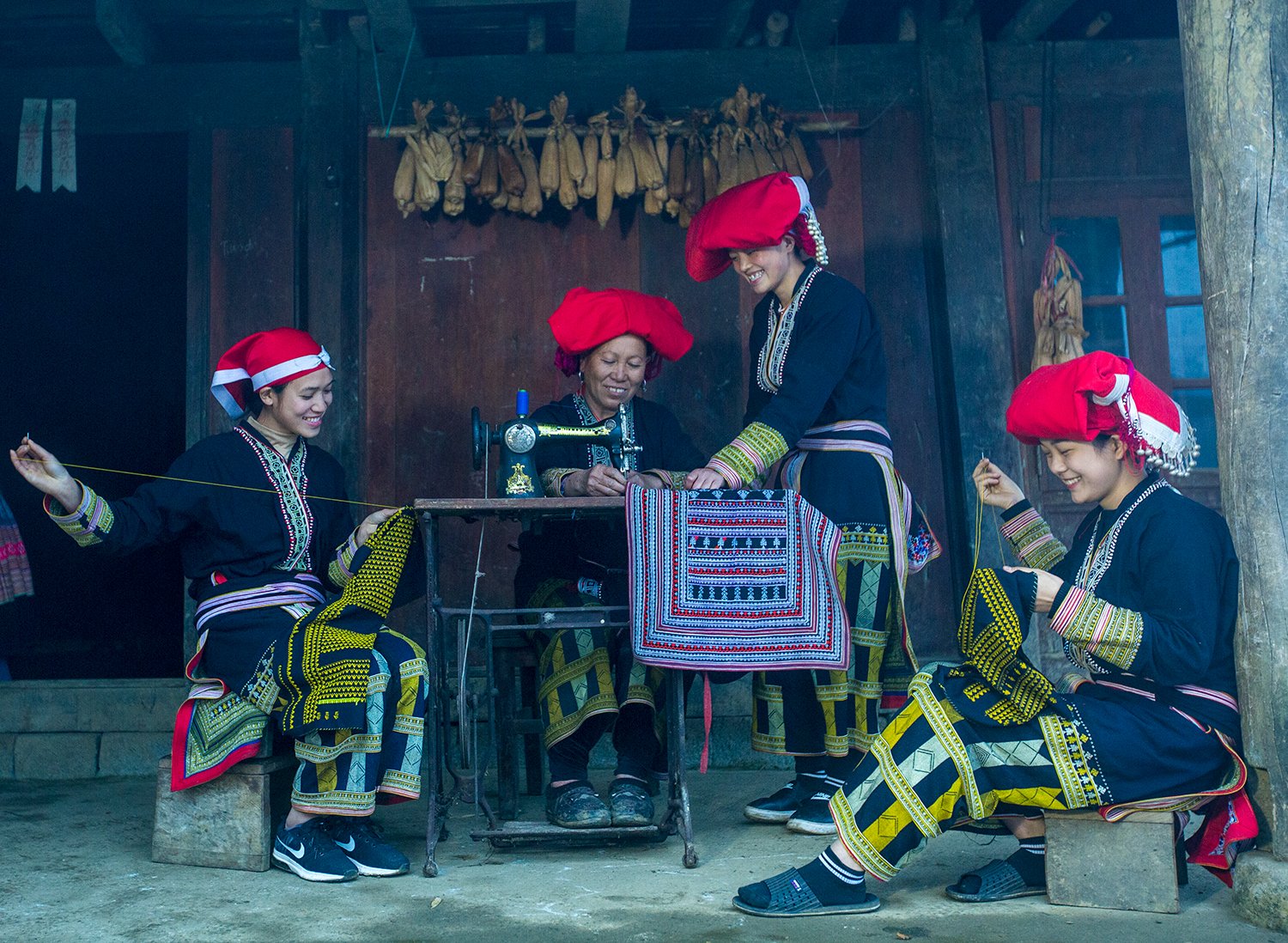
Red Dao Women in Ta Phìn
Ta Phìn is about 12 km from the center of Sa Pa. The road leading into the village is winding, rugged, and steep in some sections. Upon arriving at the village entrance, visitors will encounter the friendly smiles of innocent highland children as well as warm greetings from the local residents.
The traditional attire of the Red Dao women is very colorful. In the past, Red Dao men often kept long hair tied at the back or styled into a bun on the top of the head. Their everyday clothing typically includes short or long shirts in indigo or black, decorated with characteristic patterns. The women’s clothing is more diverse, based on the belief that a beautiful outfit should include five colors, with red being the dominant hue. From clothing, headscarves, waistbands, to hats—all are embroidered and woven by the hands of Red Dao women. The complete traditional outfit, called “Huy Lâu,” includes a dress, hat, scarf, waistband, shoes, and leg wraps.
An interesting note: The Red Dao people do not have their own writing system; instead, they use a modified Han script called Nom Dao or Dao script, and their spoken language is part of the H’mông-Dao language family.
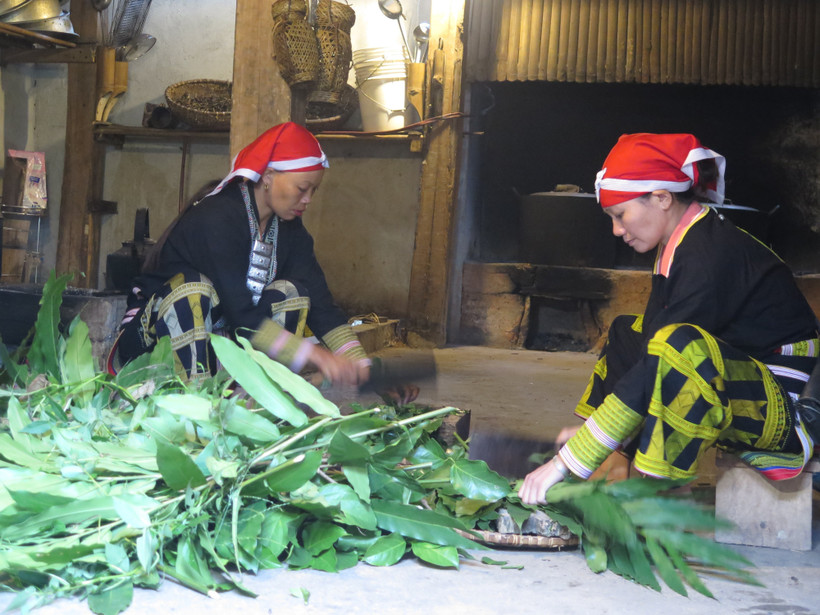
Herbal Bath Remedies of the Red Dao People
The Red Dao people in Ta Phìn are renowned for their herbal bath treatments, which are highly beneficial for health. Many tourists visiting Sa Pa come here to enjoy this herbal bath service, which uses over ten different types of herbs, sometimes up to 120 varieties. The herbal bath is a traditional custom of the Red Dao, believed to treat ailments such as muscle, bone, and joint pain, colds, itching, constipation, and to boost physical strength after childbirth, illness, or strenuous labor. This practice is not only a health care method but also an integral part of the Dao community’s cultural identity.
According to the travel experiences of many visitors, they often choose to visit Sa Pa toward the end of the year to explore and witness the rich traditional festivals firsthand.
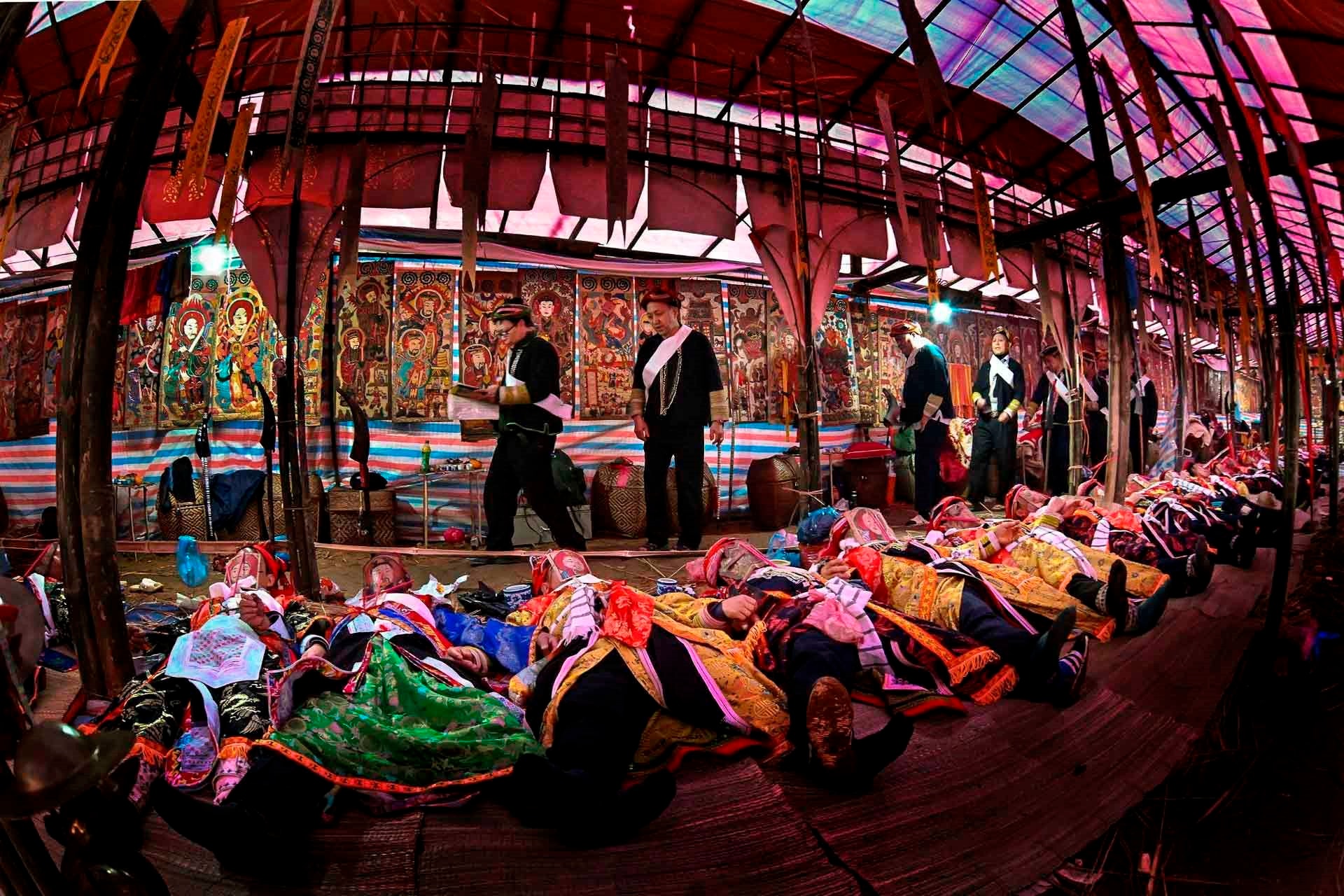
The Red Dao’s Rite of Passage (Cấp Sắc)
The Rite of Passage for the Red Dao people is usually held in November or December when the community has free time. The ceremony aims to recognize individuals as descendants of Bàn Vương, the ancestor of the Red Dao. The rite is divided into multiple levels: 3, 7, and 12 lamps. Male members of the Red Dao must undergo this rite, passing through 3 lamps, to be considered worthy and virtuous, and thus officially recognized as descendants of their ancestors. This ceremony holds deep spiritual significance, emphasizing education and maintaining a connection to their roots and ancestors.
Additionally, during the Lunar New Year, tourists can witness a very unique festival exclusive to the Red Dao the “Leap Year Festival” (Tết Nhảy). This festival is held at the beginning of spring over three consecutive days. During Tết Nhảy, the main offering for sacrifice and consumption is pork. The Red Dao celebrate the New Year with a dance called “Nhi-ang chằm Đao,” which promotes health and martial arts skills. All dance movements are performed continuously with skill and finesse by the performers. Young men, guided by the village shaman “Chái Peng Pi,” organize 14 leading dances to invite spirits and ancestors back to celebrate the New Year. Throughout the three days, the festivities are intertwined with feasting, singing, and dancing, with alcohol flowing after each performance. The dances and songs are designed to invoke good fortune for the villagers, prosperity in life, and to honor the hard work, sacrifices, and heroic resistance of their ancestors against foreign invaders, defending their homeland and nation. After these three days of continuous celebration, everyone returns to their daily routines.
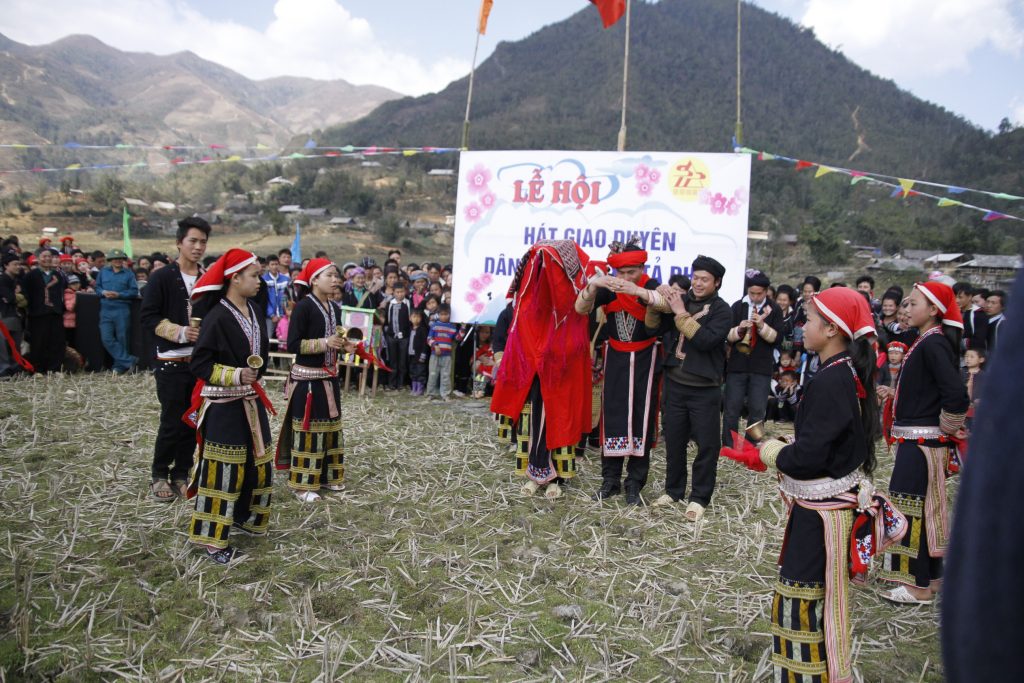
Dao Red Youths Singing the “Giao Duyên” (Love Song) Festival
Meanwhile, the “Giao Duyên” singing festival is held annually in early January. This festival features engaging activities such as crossing bamboo bridges over streams, climbing poles to retrieve prizes, and mountain climbing contests. The Red Dao also have a tradition of singing Giao Duyên between unmarried men and women to help them find their lifelong partners. Songs are exchanged between villages to forge new friendships, and singing is also used to pray for favorable weather, bountiful harvests, prosperous family businesses, and good health. The festival offers an opportunity for long-lost friends to meet, share personal feelings through singing and flute melodies, and strengthen social bonds.
With their simple lifestyle, honest and close-knit people, fresh natural environment, and unique customs, Ta Phìn is undoubtedly a village that visitors should explore when taking a Sa Pa tour.
0 Comment